
TRACE Sampling Guidance
Practical guidance to help you take and document samples in a way that keeps them useful for later review.
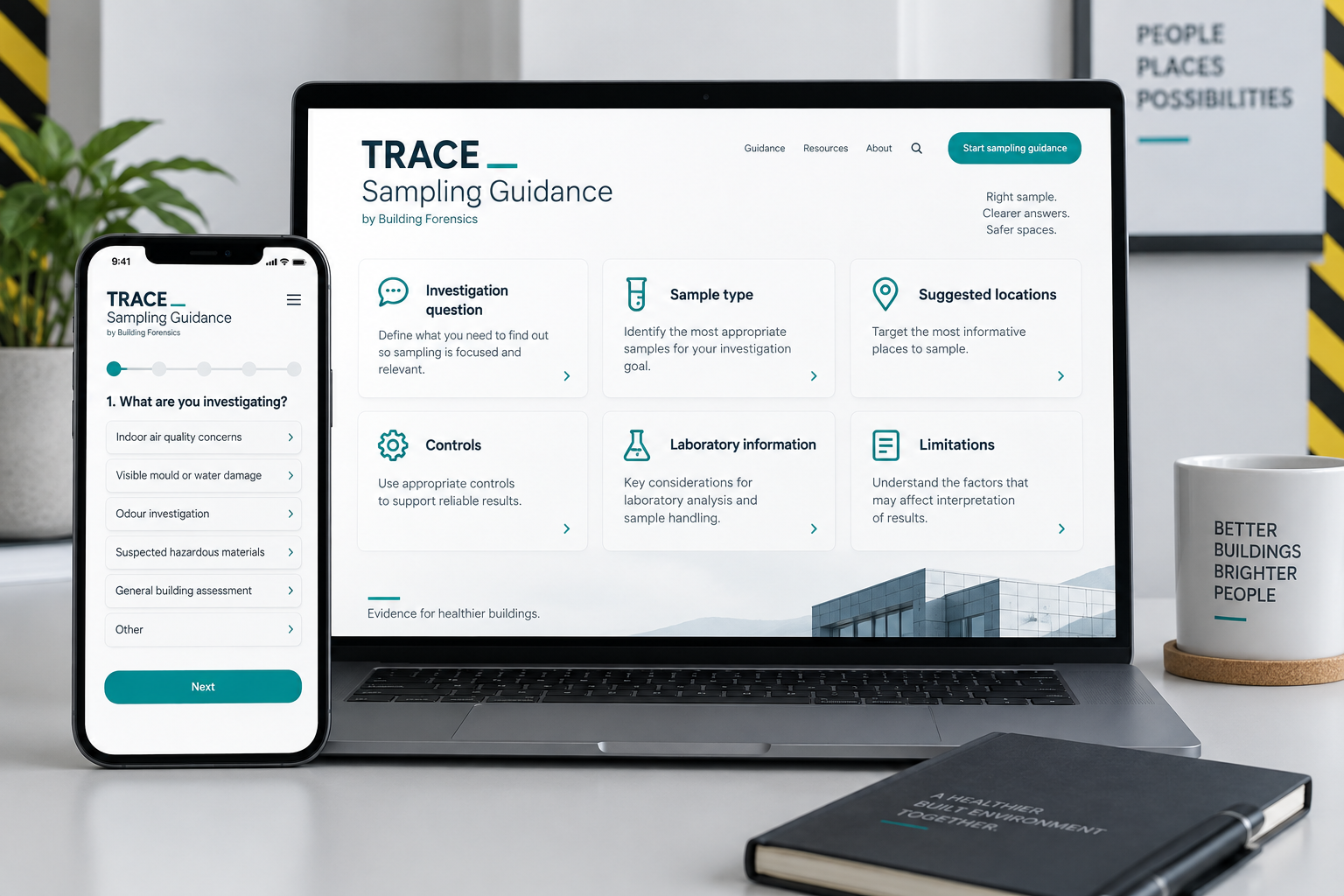
Marketing mockup of the application interface. Not a verified screenshot of live functionality.
The problem it helps organise
Samples taken without a clear method are often unusable. Without records of where, when and how a sample was collected, even a good laboratory result can be hard to interpret or defend.
What it helps you do
TRACE provides structured guidance on how to approach sampling — what to sample, where, in what order, and how to record the context — so that any results you obtain are meaningful and can be compared against the conditions in your property. It provides you with a list of specialist and vetted labs and services to assist you; check the requirement to receive a direct link to suppliers and their websites.
Specialist & Vetted Laboratories & Services
TRACE provides you with guidance on accredited laboratory standards and vetted services to assist you. Check the requirement below to view the accredited analytical pathways.
Check the requirement above to review accredited laboratory standards and analytical specifications.
5 accredited testing and verification criteria ready
How it works
The tool walks you through a sampling approach: identifying likely reservoirs and exposure pathways, choosing appropriate sample types, and recording the conditions and locations for each sample. It supports a defensible chain of information rather than ad-hoc swabs.
What you receive
A documented sampling plan and record of context for each sample, ready to accompany laboratory analysis and professional review.
Who it is for
Occupants and professionals who need to collect environmental samples in a structured, repeatable way that supports later interpretation.
Relationship to other Building Forensics products
Pairs naturally with the Lab Report Interpretation, which helps interpret the results that structured sampling produces, and with Parallax 2 — Possible Exposure Routes, which organises the wider building conditions around the samples.